
Alcoholic Fermentation in Wine: What It Is and Why Its Development Impacts Wine Quality
Alcoholic fermentation in the wine industry
Alcoholic fermentation (AF) in wine is a process carried out by yeasts—unicellular, eukaryotic organisms (Image 1)—to obtain energy under anaerobic conditions, i.e., in the absence of oxygen. These microorganisms can convert sugars such as glucose into ethanol. In simplified form (leaving aside energetic aspects), the reaction uses glucose from grape must as the reactant and produces ethanol and carbon dioxide:
C6H12O6 → 2 CH3-CH2OH + 2 CO2
This metabolic pathway enables the cell to generate energy in the form of ATP without consuming oxygen. The reaction is catalyzed by the enzyme alcohol dehydrogenase, present in wine yeasts and certain bacteria.
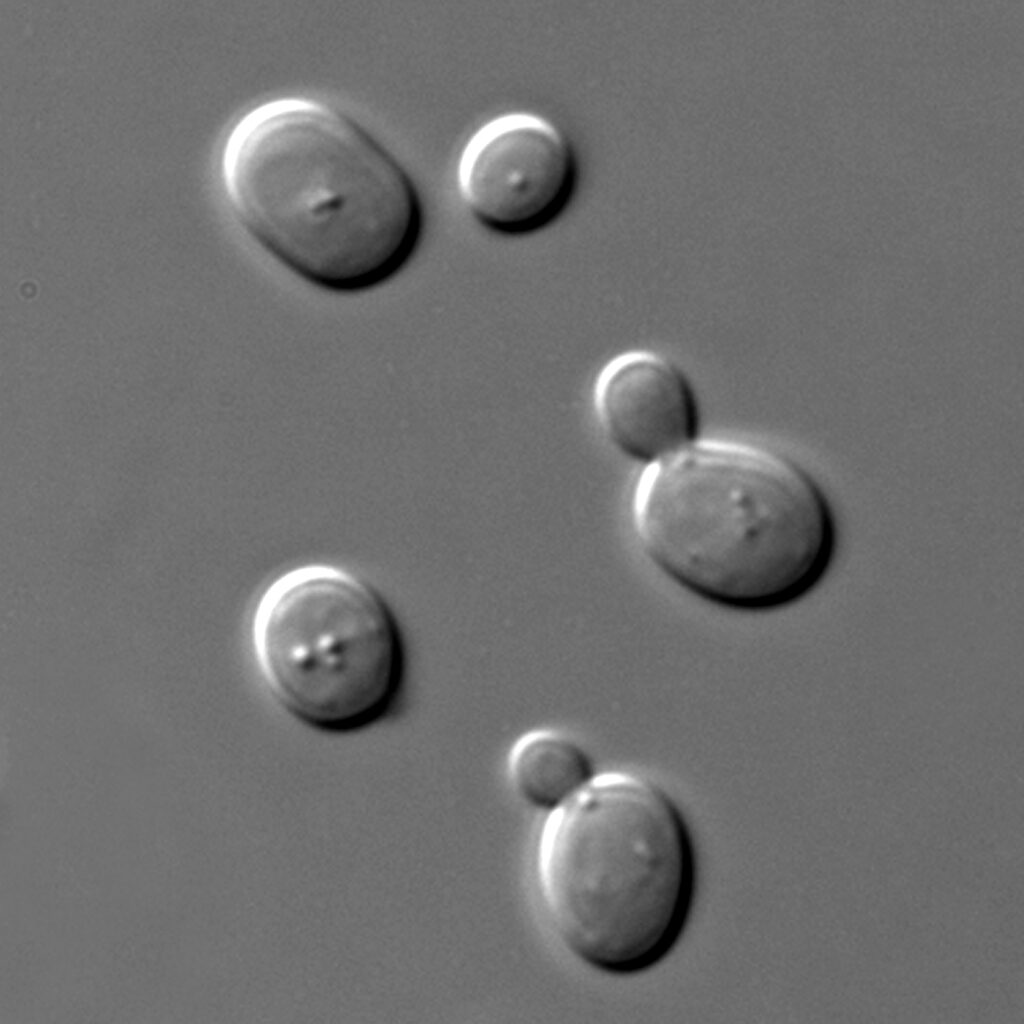
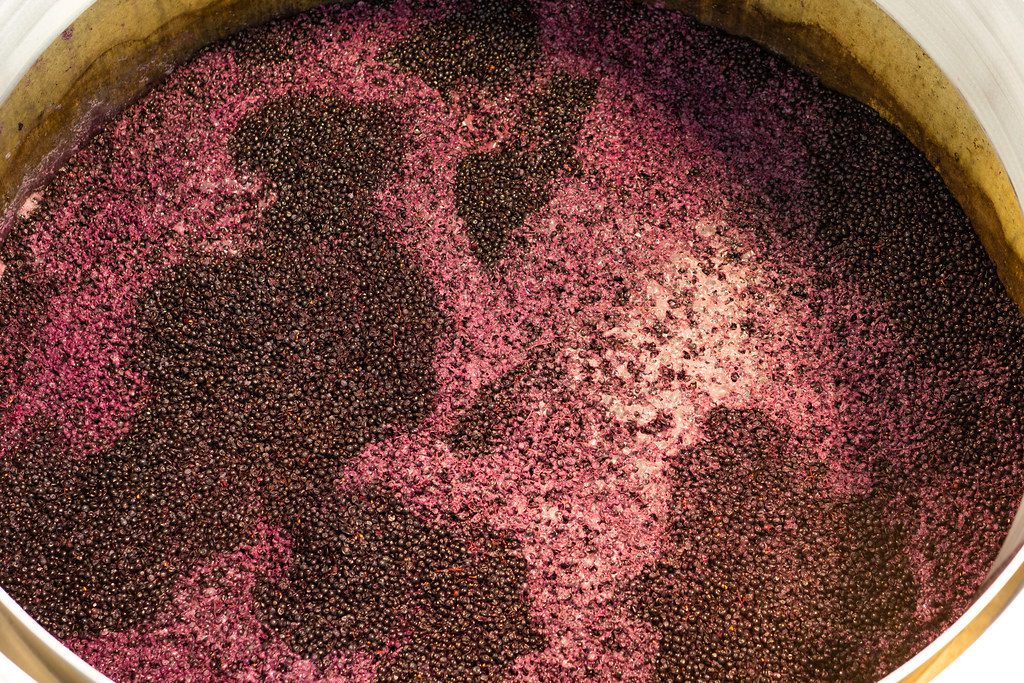
Image 2: Cap formation during red wine fermentation in an open barrel. Source: Ben Macaskill on www.flickr.com.
The “tumultuous” phase of fermentation
The CO₂ produced becomes especially noticeable during the tumultuous phase of fermentation, indicating high metabolic activity by yeasts. This CO₂ is the same gas found dissolved in wines such as semi-sparkling wines (which retain CO₂ from the first AF) and in sparkling wines, which undergo a second AF, such as Cava, Champagne, and Prosecco. In red wine fermentation, CO₂ release lifts the skins and solids, forming what is commonly known as the cap (“sombrero”) (Image 2).
Why is controlling alcoholic fermentation so important?
The process
During AF, beyond the conversion of glucose into ethanol, a series of additional processes occur due to the metabolism of fermenting yeasts and other microorganisms present in the must. Different yeast strains produce different wine profiles based on how they metabolize the compounds available in the must. Likewise, the coexistence of multiple microorganisms within the same must can result in wines of high organoleptic complexity. Controlling which yeast is used is therefore a key lever to control the resulting wine profile.
Requirements
For a beverage to be classified as wine, it must meet certain requirements related to the raw material used for AF (must or grapes), a minimum acquired alcohol level, and even a maximum residual sugar content (unfermented sugars). In addition, an AF that fails to complete properly generates extra costs for wineries, since they must restart a stuck fermentation that occupies tank space, the wine may deteriorate rapidly due to different factors, and additional labor is required.
Controls during the process
AF development is influenced by factors such as pH, fermentation temperature, free SO₂, yeast assimilable nitrogen (YAN), and the presence of toxins or fungicide residues in the must. During AF, daily monitoring of temperature and density is performed to control fermentation kinetics and intervene as early as possible if needed. The appearance of bacteria such as Acetobacter (which produce acetic acid) or yeasts that produce acetaldehyde clearly illustrates how delicate microbiological control of AF can be.
The end of alcoholic fermentation
AF is considered complete when the wine reaches an approximate density of 990–993 g/L for whites and 992–995 g/L for reds. This indicates that yeasts have consumed as much fermentable sugar as possible.
How can we achieve greater control of alcoholic fermentation in the winery?
At LEV2050, we offer a wide range of services and products related to alcoholic fermentation—from native yeast selection studies and biological control of yield in alcoholic strength, to customized nutrition studies. Our services are designed to express the full potential of grapes and terroir, working in the most autochthonous and distinctive way possible.
Based on our yeast expertise, we have developed fermentation products to ensure optimal AF performance, including nutrients and detoxifiers, also available in organic-certified versions. Our drive for innovation and tailored solutions has enabled us to develop products such as K-ACID®, which allows the wine’s pH to be lowered through biological means.
LEV2050 has successfully integrated into its offering a range of patented bioreactors—BR-LEV-LC® and BR-CV®—capable of automated propagation and acclimation of both yeasts and lactic acid bacteria in the winery, delivering savings on purchasing these cultures. Their ease of use and automation save time during harvest, ensure process traceability and reproducibility, provide greater fermentation control, and improve organoleptic profiles.
By Dimitri Nicolaides, Agronomist Engineer, M.Sc. in Oenology.
Sources
Cox, M. M., & Nelson, D. L. (2005). Lehninger Principles of Biochemistry. (4th ed.). WH Freeman & Company. ISBN 978-0-7167-4339-2
Jackson, R. S. (2008). Wine science: Principles and applications (3rd ed). Elsevier Acad. Press.
Pszczólkowski, P., & Ceppi de Lecco, C. (2011). Manual de Vinificación: Guía práctica para la elaboración de vinos (1st ed.). Ediciones Universidad Católica de Chile. https://www.researchgate.net/publication/259284987_Manual_de_Vinificacion_Guia_practica_para_la_elaboracion_de_vinos
Commission Delegated Regulation (EU) 2019/934 of 12 March 2019
Ribéreau-Gayon, P., Dubourdieu, D., Donèche, B., & Lonvaud, A. (2006). Handbook of Enology Volume 1: Microbiology of Wine and Vinifications (2nd ed., Vol. 1). John Wiley & Sons, Ltd. https://doi.org/10.1002/0470010363.fmatter
Zamora Marín, Fernando (2003).Elaboración y crianza del vino tinto: aspectos científicos y prácticos. Mundi Prensa. ISBN 84-89922-88-8