
LEV2050 Bioreactors
What is a bioreactor?
A bioreactor is a device designed to maintain a controlled, optimal environment in which microorganisms can grow and develop. These microorganisms—including bacteria, yeasts, and fungi—are used in a wide range of applications, such as pharmaceuticals, food, and agricultural solutions.
Bioreactors can be used for:
- Producing fermentation starters, probiotics, microorganisms for field application, etc.
- Producing biomolecules (meat-related biomolecules, prebiotics, postbiotics, etc.)
- Enzymatic and hydrolytic processes (both for generating high value-added products and for valorizing existing products)
How does a bioreactor work?
Bioreactors operate by creating controlled environments that support microbial or cell growth and activity. Key operational elements include:
Variable control
Bioreactors regulate critical variables such as temperature, pH, oxygen concentration, agitation, and feed rate. These parameters are adjusted to match process requirements and ensure optimal growth and production.
Agitation and oxygenation
Agitation and oxygenation are essential to maintain uniform, controlled oxygen distribution inside the bioreactor. This is achieved through mechanical stirring and controlled oxygen injection.
Automated monitoring and control
Bioreactors are equipped with automated monitoring and control systems that continuously record process conditions and make real-time adjustments—keeping the environment within target ranges.
Types of bioreactors
There are multiple types of bioreactors, each designed for specific applications. Some of the most common include:
Bioreactors for fermentative processes
Fermentation bioreactors are mainly used to produce microorganisms for food and beverage applications.
Laboratory bioreactors
Laboratory bioreactors are smaller systems used for research and development. They are ideal for process optimization and small-scale trials. They are often highly configurable and allow precise control of process conditions.
In-situ autoclavable bioreactors
In-situ autoclavable bioreactors allow culture media to be sterilized directly inside the reactor. They are intended for high value-added product applications due to the complexity of the final product process. As a result, in-situ autoclavable systems reduce contamination risk.
Advantages of bioreactors
Compared to traditional growth and production methods, bioreactors offer significant advantages:
Precise control:
Controlled microorganism propagation results in more traceable, reproducible, efficient, and high-quality production—enabling higher-quality products.
Scalability:
Bioreactor processes scale easily, supporting industrial-level production.
R&D capability:
In research settings, laboratory bioreactors are essential tools for development and process optimization.
Bioreactor applications
Bioreactors are widely used across many industries, including:
Pharmaceutical biotechnology
Bioreactors are used to produce medicines and pharmaceutical products, including monoclonal antibodies, insulin, vaccines, and antibiotics.
Food production
In the food industry, bioreactors are used to generate microorganisms that act as fermentation starters for products such as yogurt, cheese, bread, beer, wine, cured raw meats, and more.
LEV2050 bioreactor range for wineries
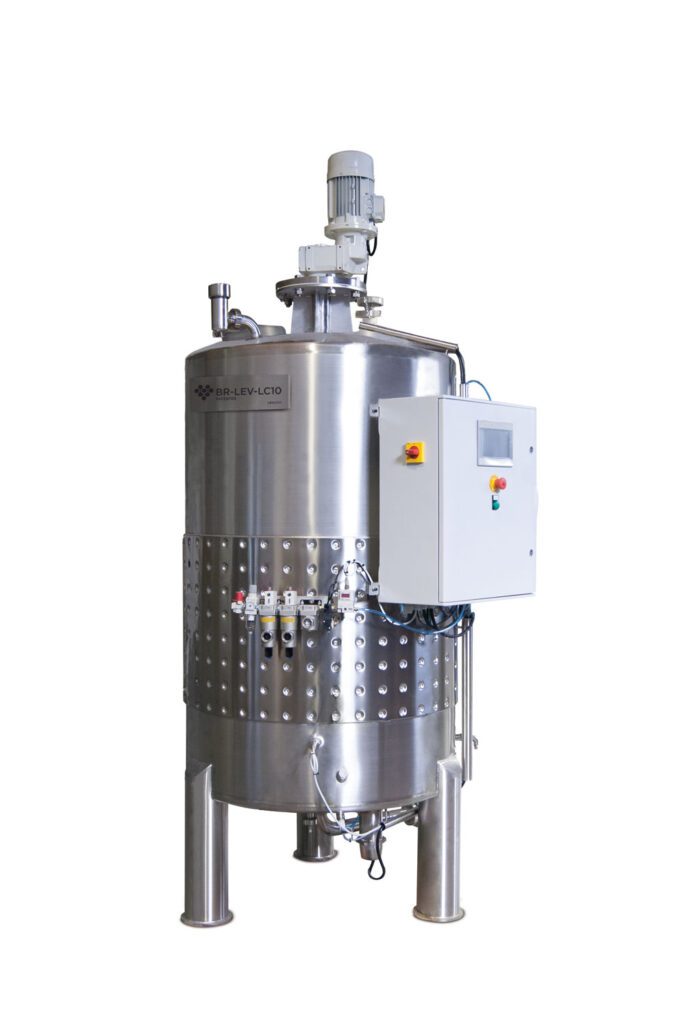
LEV2050 winery bioreactors (BR-LEV-LC models) enable cell propagation (yeasts, lactic acid bacteria, or fungi). These processes deliver cost savings, improved microorganism vitality and final product quality, and time savings through automation. Most importantly, they provide greater product control, since LEV2050 winery bioreactors operate through automated, controlled, traceable, and reproducible processes.
- SAVINGS IN YEASTS, LACTIC ACID BACTERIA, AND MANNOPROTEINS (BÂTONNAGE)
- CONTROL
- TRACEABILITY
- EASY OPERATION
- IMPROVED LOGISTICS
BR-LEV-LC range
Thanks to the automation and process control of BR-LEV-LC propagation (Image 1), we can achieve up to 90% savings in yeast purchases, save time during harvest, improve the aromatic and structural quality of wines, and safely control inoculum production.
Bioreactors for pied de cuve generation in sparkling wines:
Our patented bioreactors designed for pied de cuve generation in sparkling wines (BR-CV models) (Image 2) enable progressive, controlled yeast adaptation to ethanol—producing pied de cuve for tirage in a controlled and automated way. They also allow the propagation of yeasts and lactic acid bacteria, as well as the production of mannoproteins from lees using the bâtonnage program—making them highly versatile systems.
BR-CV range
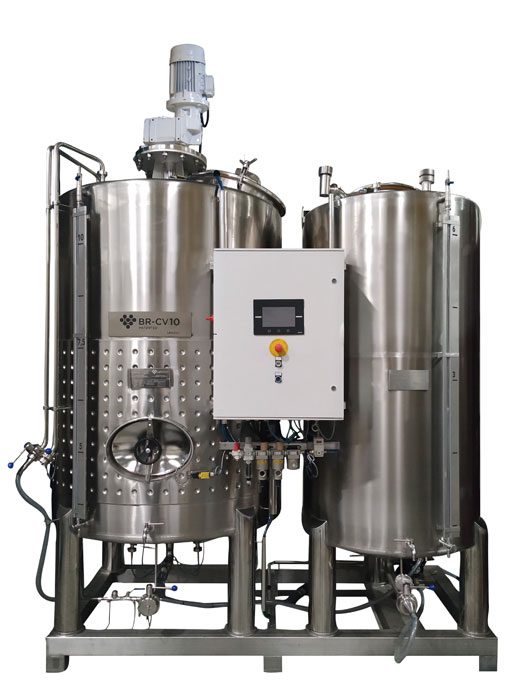
LEV2050® bioreactors help you reduce yeast and LAB costs, obtain more vital inocula, secure fermentation performance, and maintain full real-time control of the propagation process from your mobile phone. All of this is delivered through an automated, cost-effective workflow—whether using your own selected microorganisms or commercial strains. Their ease of use, high yields, efficiency, and versatility make them increasingly essential equipment for wineries.
Bioreactors are tools that drive progress toward efficient, controlled production across industries. Their ability to create optimal environments for microorganisms—combined with their versatility—makes them an essential component in many fields, from scientific research to large-scale production.