
Yeasts and Wine
Winegrowing terroirs form complex ecosystems where diverse microorganisms coexist—such as filamentous fungi, yeasts, and bacteria. These populations vary in abundance, complexity, and biodiversity depending on each terroir’s soil and climate conditions, viticultural practices, and the vintage. This makes every vineyard a unique source of microbial biodiversity for winemaking.
Where do the yeasts found in must come from?
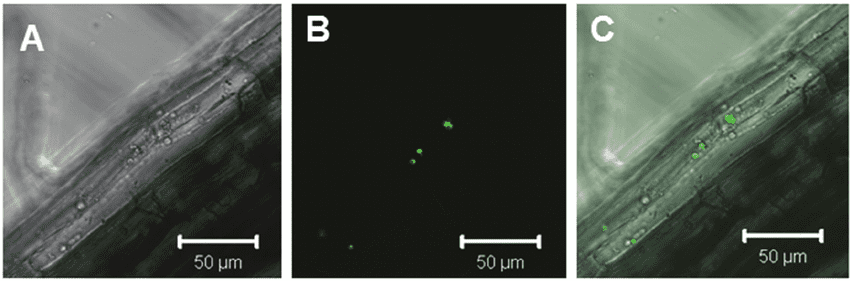
Yeasts and bacteria naturally present in vineyard soils are absorbed by vine roots during nutrition and transported through the xylem to the grapes (Image 1).
Yeast communities present on grape bloom (pruina) depend both on the cultivated grape variety and on the fungicide treatments applied. These yeasts are also involved in spontaneous fermentations, with the same factors influencing the proportion of Saccharomyces cerevisiae strains present during fermentation.
How do yeast populations evolve in must?
Biodiversity
Must—the raw material for winemaking—initially contains a wide variety of microorganisms. However, as fermentation progresses, their numbers decrease and biodiversity is naturally lost because alcoholic fermentation conditions eliminate many of them. pH is low, conditions are anaerobic, nutrients are limited, sulfur dioxide is present (as an antioxidant and antimicrobial), ethanol concentration increases, and so on.
Population kinetics
Yeasts are typically found naturally in must at concentrations of 10³ to 10⁵ CFU/mL, depending on multiple factors. They are mainly concentrated inside the berries after moving through the xylem and vine roots. A smaller number of yeasts are found on the grape epidermis (the outer skin surface). These are generally exogenous to the vineyard and are carried by wind, animals, and insects, depositing on grapes at concentrations below 10² CFU/mL.
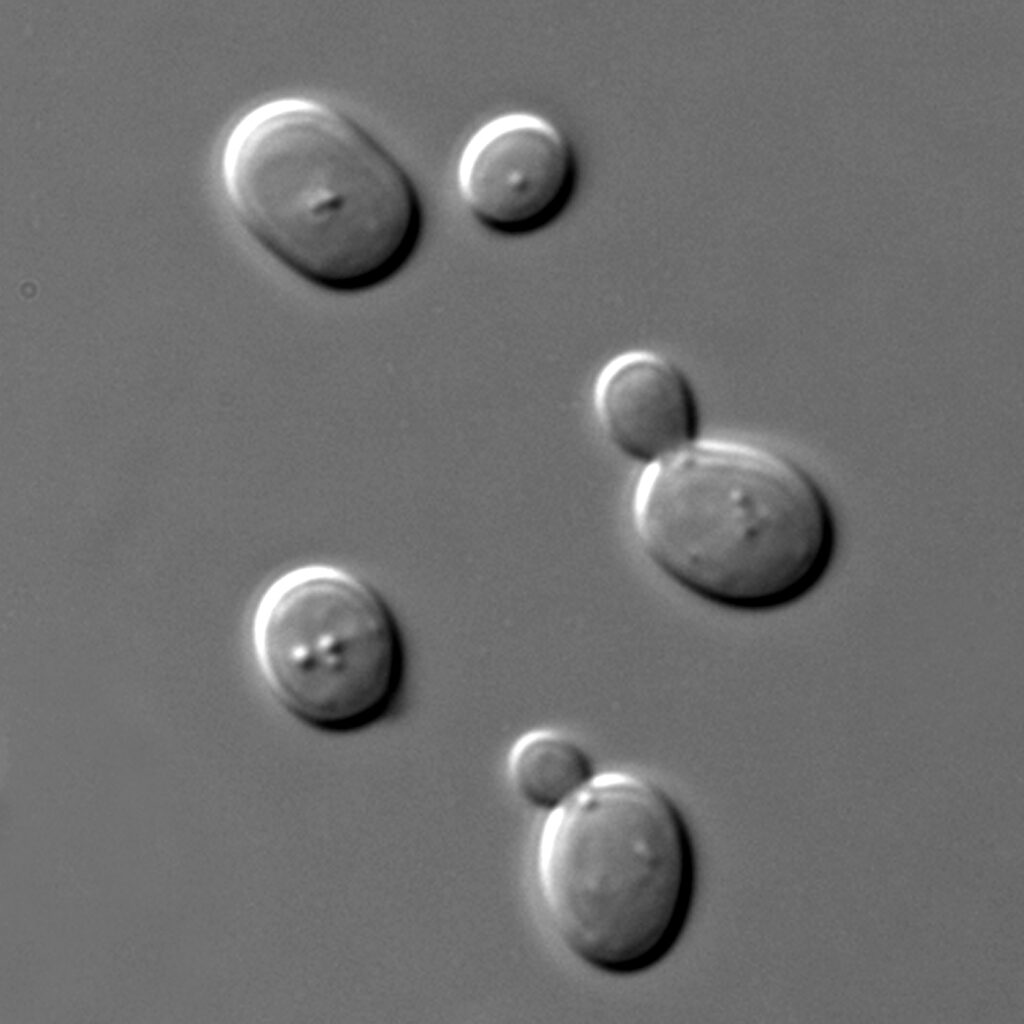
Non-Saccharomyces yeasts (such as Hanseniaspora, Pichia, or Candida) initiate spontaneous fermentation, as they are the most abundant in terms of cell concentration. After a few days, they reach their highest population level (10⁷ CFU/mL), but as alcohol increases, they begin to undergo lysis. Meanwhile, Saccharomyces (Image 2), with greater tolerance to ethanol and winery conditions, grows and can reach up to 10⁸ CFU/mL.
The death of non-Saccharomyces yeasts is attributed to their inability to tolerate ethanol concentrations above 5–8% v/v under winery conditions.
Fermentation kinetics are influenced by must composition and winery conditions: sugar concentration (glucose + fructose), yeast assimilable nitrogen, vitamins, pH, pesticide residues, dissolved oxygen, presence of solids in the must, and operating conditions (temperature, SO₂, etc.).
Why is it important to understand the yeasts present during AF?
The type of fermenting yeast used is a key guarantee of fermentation viability and of the resulting organoleptic profiles. Each yeast strain has its own metabolism, and by working differently on must and its compounds, the yeast used can create a distinctive, signature profile in the final wines.
At LEV2050, we offer native yeast selection studies for first or second fermentation. Starting from a grape sample chosen by the client, we initiate a spontaneous fermentation, from which yeasts are isolated daily until AF is completed. These yeasts are then identified using metagenomic methods, and the most phylogenetically diverse individuals are selected for use as inocula in controlled microvinifications. Finally, the selected yeasts are characterized through sensory analysis (tasting) with the client, enabling them to choose the strain or strains that deliver the unique, distinctive organoleptic profiles sought by the winery for its wines.
By Dimitri Nicolaides, Agronomist Engineer.
Sources
Agarbati A, Canonico L, Ciani M, Comitini F (2019): The impact of fungicide treatments on yeast biota of Verdicchio and Montepulciano grape varieties. PLoS ONE 14(6): e0217385. https://doi. org/10.1371/journal.pone.0217385
de Celis, M., Ruiz, J., Martín‐Santamaría, M., Alonso, A., Marquina, D., Navascués, E., Gómez‐Flechoso, M., Belda, I. and Santos, A. (2019), Diversity of Saccharomyces cerevisiae yeasts associated to spontaneous and inoculated fermenting grapes from Spanish vineyards. Lett Appl Microbiol, 68: 580-588. https://doi.org/10.1111/lam.13155
Lonhienne, T., Mason, M.G., Ragan, M.A., Hugenholtz, P., Schmidt, S. and Paungfoo‐Lonhienne, C. (2014), Yeast as a Biofertilizer Alters Plant Growth and Morphology. Crop Science, 54: 785-790. https://doi.org/10.2135/cropsci2013.07.0488
Mandl K, Schieck J, Sikhavy-Richter K, Schneider V, Schmidt HP: Vines take up yeasts from soil and transport them through the vine to the stem and skins of grapes, Ithaka-Journal 2015, Arbaz, Switzerland, ISSN 1663-0521, pp. 349 -355, www.ithaka-journal.net/85
Pszczólkowski, P., & Ceppi de Lecco, C. (2011). Manual de Vinificación: Guía práctica para la elaboración de vinos (1st ed.). Ediciones Universidad Católica de Chile. https://www.researchgate.net/publication/259284987_Manual_de_Vinificacion_Guia_practica_para_la_elaboracion_de_vinos
Ribéreau-Gayon, P., Dubourdieu, D., Donèche, B., & Lonvaud, A. (Eds.). (2006).