
Vineyard Biocontrol
In a context of growing demand for agricultural products that minimize impacts on the environment, other living organisms, and human health, the industry has increasingly adopted alternative methods to control field pests and diseases in recent years. One of these methods is biocontrol, which involves using living organisms or natural extracts to regulate populations of agricultural pests and pathogens. The goal is to reduce reliance on chemical inputs while safeguarding crop quality and yield.
Why control grapevine pests and pathogens?
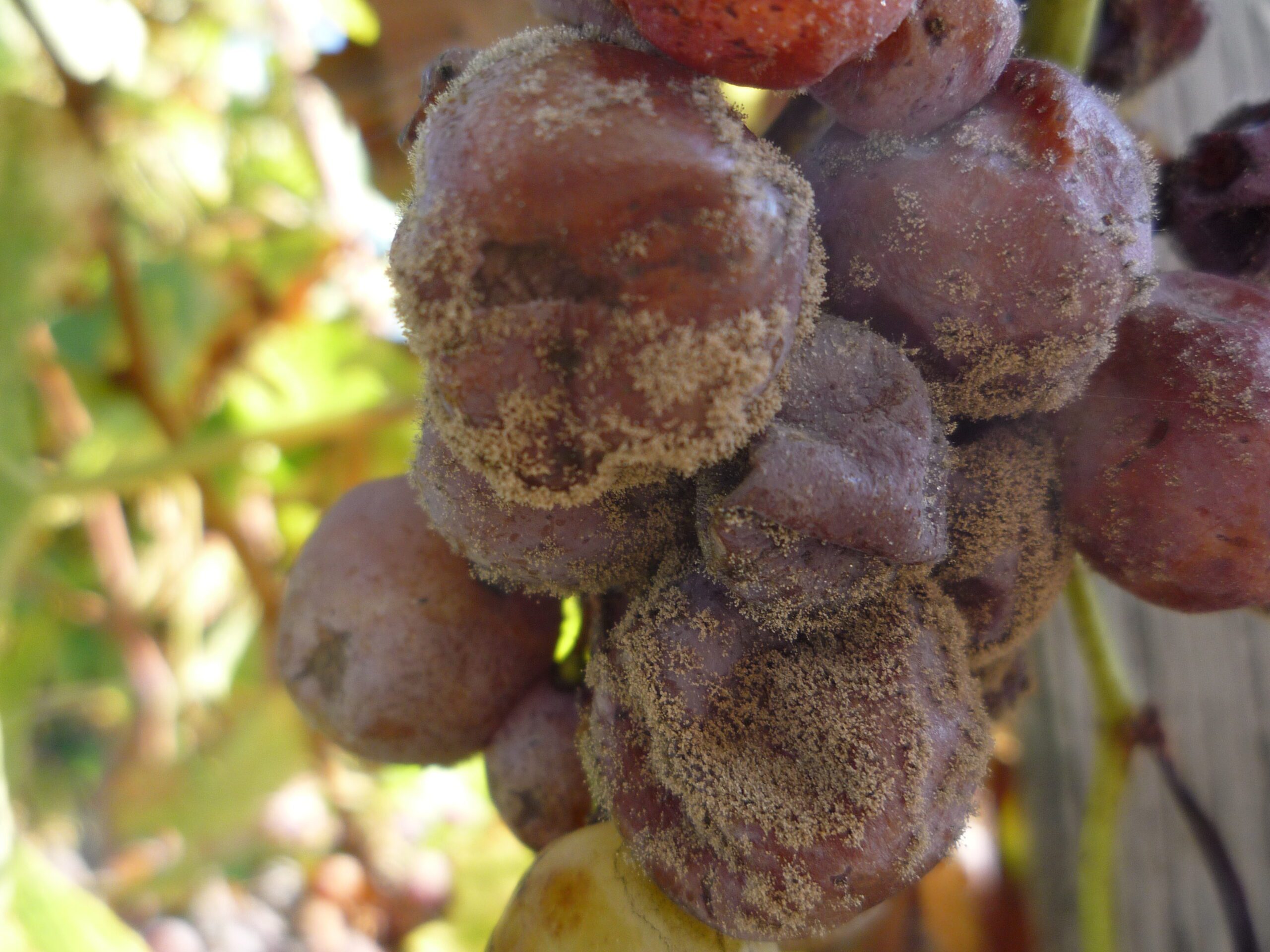
Pests such as insects and mites, and pathogens such as fungi (Image 1) and bacteria, cause direct and indirect damage to both the quantity and quality of the harvest. All of them can stress the vineyard. In addition, some attack grape clusters and berries directly—causing rot, transmitting viruses and bacteria, and consuming fermentable sugars and nitrogen—ultimately compromising harvest quality. Globally, pathogen attacks represent 20% to 40% of profit losses for farmers.
What is biocontrol?
Biocontrol involves using pheromones, naturally derived chemical extracts, minerals, predatory insects, parasites or parasitoids, and microorganisms such as bacteria, yeasts, fungi, and viruses to control pest and pathogen populations in agriculture.
These control methods help mitigate the effects of harmful agents in a “cleaner” way, reducing environmental impact.
There are also microorganisms that act as plant growth–promoting organisms, helping plants resist pests and pathogens more effectively. These microorganisms are often soil-based and can improve nutrient bioavailability for crops, increase the volume explored by roots, and facilitate access to water.
Increasingly, plant–microbiome interactions are being studied to identify associations that strengthen crops and protect them against pest and pathogen attacks.
LEV2050 innovation
LEV2050 works with the concept of integral terroir (Image 2), which aims to return to the field what originates from the field. The idea is to produce biomass in winery bioreactors in order to apply microorganism lysates as biofertilization inputs and microorganisms as vineyard biocontrol agents directly in the field.
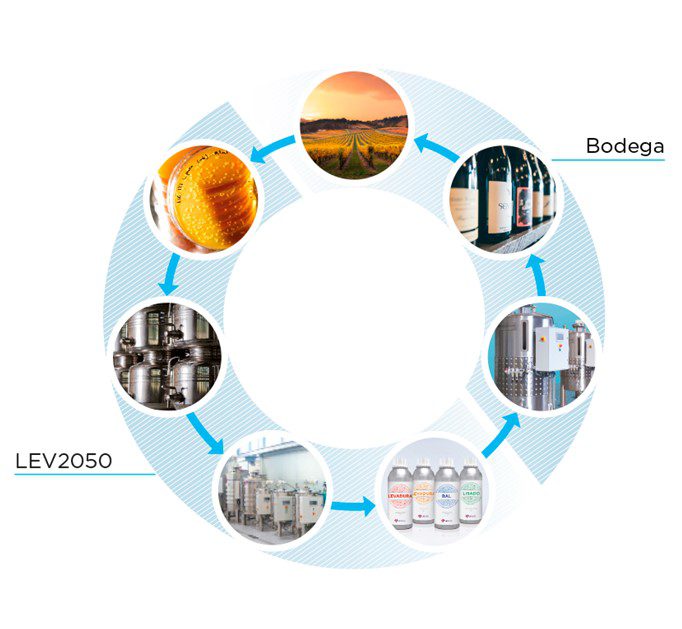
In addition, LEV2050 is developing a new tool for wineries: the multiplication of microorganisms for use as vineyard control agents. What’s new? Production of these agents can be combined with bioreactor technology, achieving high yields in microorganism output for biocontrol. This will enable growers to access the tools needed to protect vineyard quality and performance in an economical, controlled, and independent way.
By Dimitri Nicolaides, Agronomist Engineer.
Sources
Ab Rahman, S. F. S., Singh, E., Pieterse, C. M., & Schenk, P. M. (2018). Emerging microbial biocontrol strategies for plant pathogens. Plant Science, 267, 102-111.
Bru, M. Aveline, N. (2019). Qu’est-ce que le biocontrôle ? https://www.vignevin.com/article/quest-ce-que-le-biocontrole/
Le Mire, G., Nguyen, M., Fassotte, B., du Jardin, P., Verheggen, F., Delaplace, P., & Jijakli, H. (2016). Implementing biostimulants and biocontrol strategies in the agroecological management of cultivated ecosystems. Biotechnologie, Agronomie, Société et Environnement.