
Customized biomass production.
For custom biomass production, the process always starts from a small biomass volume—meaning a defined quantity of microorganisms (either yeasts or lactic acid bacteria) that have been selected and preserved by ultra-freezing at −80°C in 1 mL cryovials. They are then grown on Petri dishes (Image 1), and a series of successive scale-ups begins, increasing volume in a controlled manner while maintaining cell concentration and cell viability.
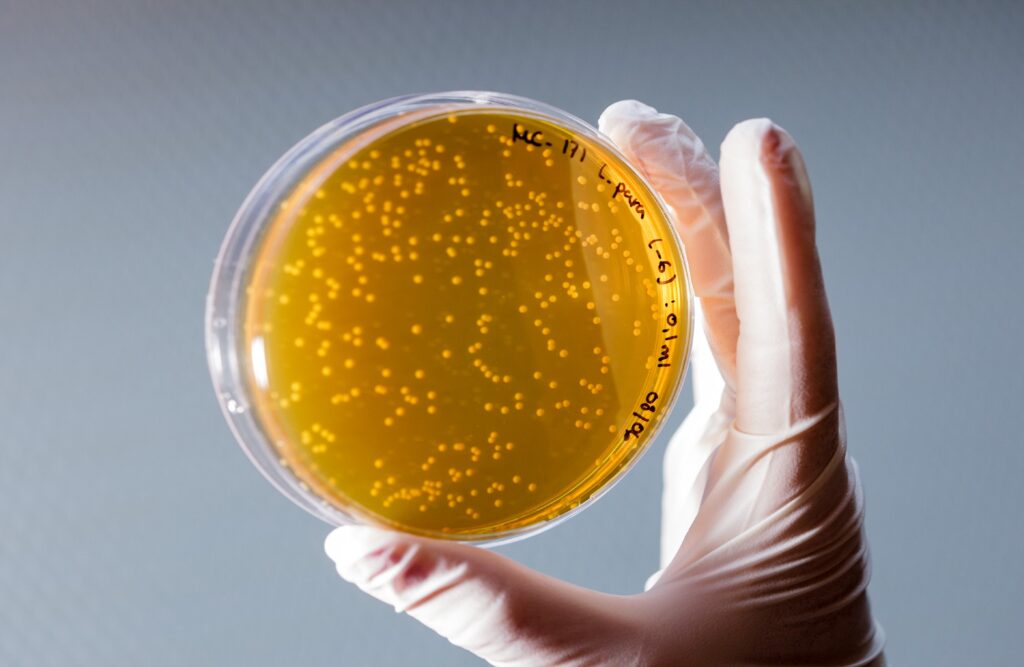
Maintaining strict hygiene and aseptic conditions is critical to obtain pure culture inocula. Particular attention must also be paid to temperature, agitation, and oxygenation to ensure optimal work under aerobic conditions in a homogeneous medium. Control of all these parameters—together with the use of specific culture media—is essential to producing high-quality inocula.
Once the scale-up stages are completed, biomass is obtained in a cream format, ensuring optimal microorganism vitality and viability. This translates into improved wine organoleptic quality and enhanced fermentation kinetics.
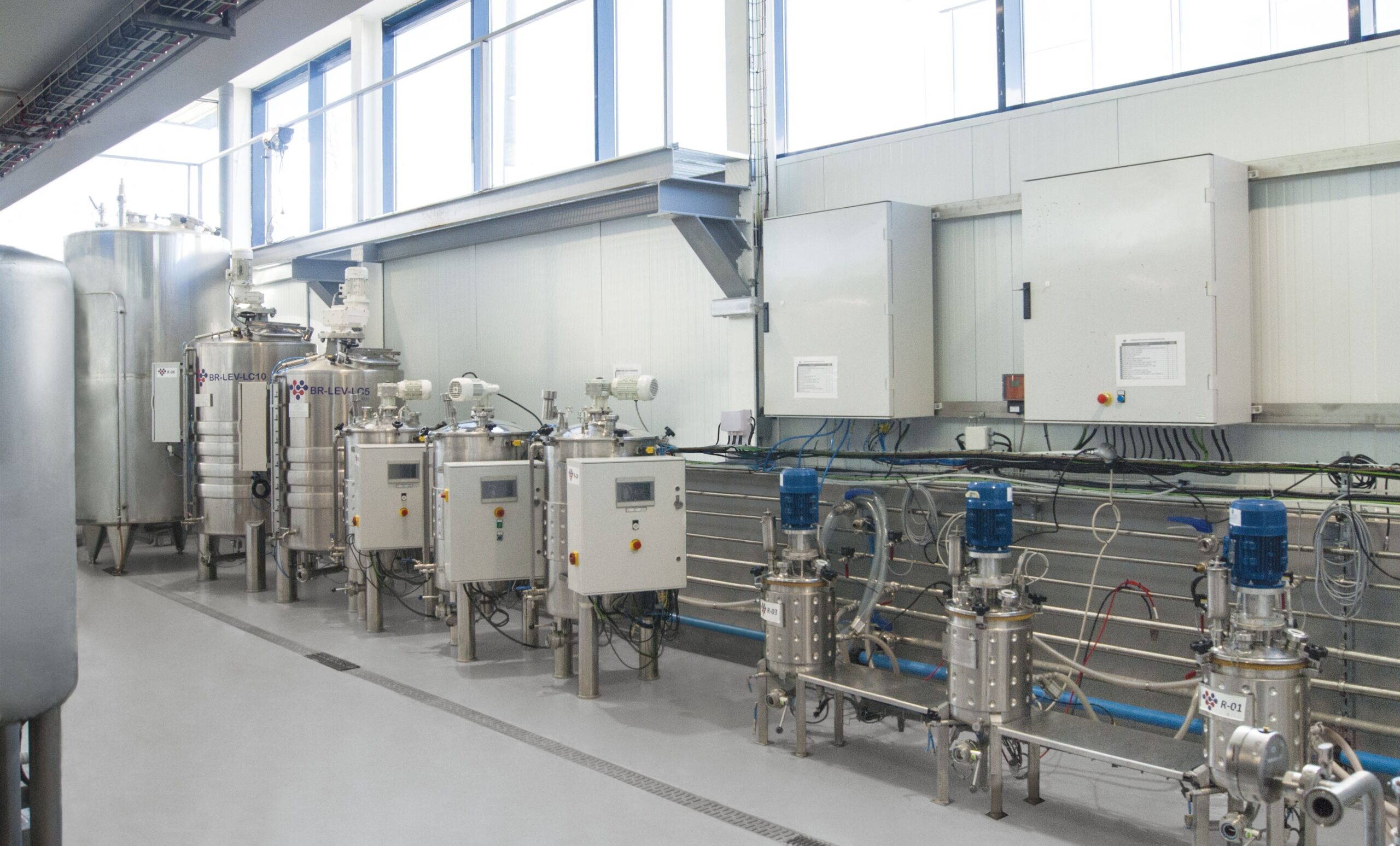
LEV2050 operates a production facility (Image 2) with the capacity and versatility to manufacture yeasts, lactic acid bacteria, lysates, and customized nutrients. We carry out strict traceability analyses and controls for viability and contamination to provide our customers with the highest product quality.
Sources
Pérez-Torrado, R., Gómez-Pastor, R., Larsson, C. et al. (2009). Fermentative capacity of dry active wine yeast requires a specific oxidative stress response during industrial biomass growth. Applied Microbiology and Biotechnology, 81, 951–960. https://doi.org/10.1007/s00253-008-1722-9
Vieira, Érika Durão, Andrietta, Maria da Graça Stupiello, & Andrietta, Silvio Roberto. (2013). Yeast biomass production: a new approach in glucose-limited feeding strategy. Brazilian Journal of Microbiology, 44(2), 551-558. https://dx.doi.org/10.1590/S1517-83822013000200035