
Vineyard Fertilization
Fertilization objectives:
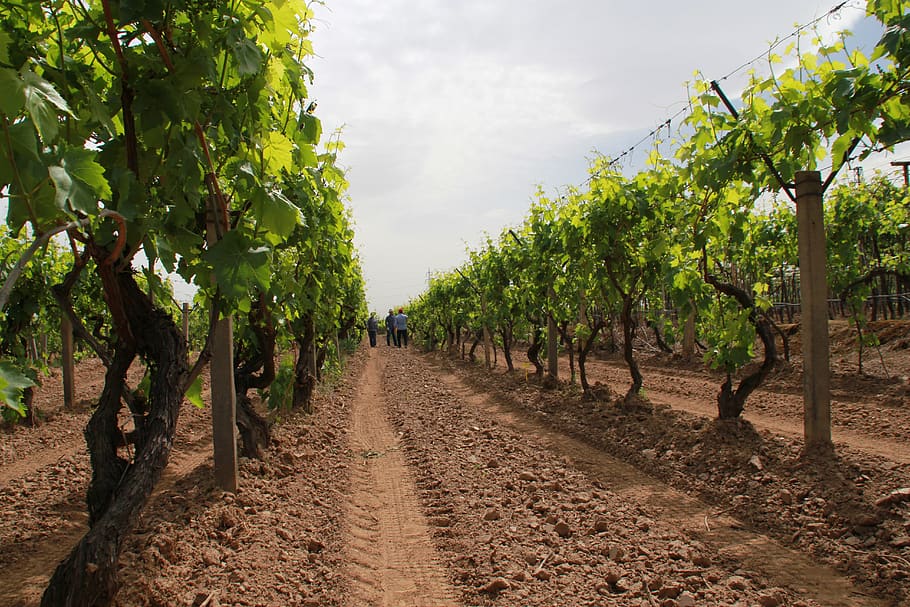
Vineyard fertilization addresses the need to replace the mineral elements consumed by the vine during the season to produce vegetative tissue and grapes (Image 1). Compared to other crops, vineyard nutrient requirements are relatively low; however, maintaining a balanced nutritional status—avoiding both deficiencies and excesses—is essential to prevent physiological disorders. These disorders impact vine vigor, harvest yield and quality, pathogen susceptibility, and long-term vine longevity.
Fertilization must also maintain or restore the agronomic potential of soils by compensating organic matter losses and safeguarding the fertility of viticultural land. Vineyard fertilization programs focus mainly on macronutrients—N, P, and K.
Types of fertilization:
There are four main ways to fertilize vineyards: base fertilization (before planting or renewal), soil fertilization, fertigation, and foliar fertilization. Base fertilization is typically performed in autumn, while maintenance fertilization is usually carried out in spring.
Before fertilizing, it is essential to know: (1) existing soil nutrient levels, (2) the vineyard’s annual nutrient removal, and (3) the soil’s physicochemical properties. Soil and foliar (or petiole) analyses are key decision-support tools for building an effective fertilization plan.
Base fertilization:
Base fertilization prepares the land to ensure adequate fertility before vineyard establishment. It is then repeated periodically (every certain number of years) to correct potential deficits depending on vineyard consumption. Organic matter is often applied during these interventions to help maintain soil fertility.
Soil fertilization:
Soil fertilization consists of applying amendments directly onto the soil near the base of the vines. The goal is for the fertilizer to integrate into the soil through rainfall (or irrigation) and surface mechanical work. This maintenance approach helps renew soil fertility year after year.
Fertigation :
Fertigation involves dissolving nutrients in irrigation water and applying a fertilizing solution to the vineyard. Different chemical forms are selected depending on water pH, soil needs, and vine requirements—while preventing mineral salt precipitation within irrigation systems. In general, this method is highly efficient: it helps renew soil fertility, targets inputs near the roots (rhizosphere), and can partially correct vine deficiencies.
Foliar fertilization :
Foliar fertilization applies nutrients directly to vine leaves. This enables rapid correction of deficiencies and is often the most efficient option when an immediate nutritional adjustment is needed. It is a short-term strategy that can only be applied during the growing season. Foliar treatments are often combined with soil applications to achieve both short- and medium-term effects. If deficiencies are observed, the best approach is to intervene with foliar fertilization as early as possible. Finally, foliar fertilization allows direct influence on the current year’s crop.
Nutrients:
Nutrients are commonly classified as macronutrients (N, P, K) and micronutrients (Ca, Mg, Fe, B, Mo, Zn, Mn). In this article, we focus exclusively on macronutrients.
Nitrogen :
Nitrogen is essential for vine development because it is involved in the formation of nucleic acids, proteins, and enzymes, as well as other compounds such as phytohormones required by plants. It increases productive capacity and berry size. It also supports healthy fermentation by ensuring sufficient protein and Yeast Assimilable Nitrogen (YAN; Spanish: NFA) for yeasts. Excess nitrogen can lead to vigor imbalance, increased disease risk (Botrytis, downy mildew, powdery mildew), poor fruit set, spider mite and aphid pressure, delayed veraison and ripening, and may increase toxic biogenic amines in wines, such as histamines.
Spray applications during the season prior to harvest demonstrate proper plant assimilation of ammoniacal and amino nitrogen, increasing YAN and reducing nitrogen deficiency risks during fermentation. A balanced nitrogen fertilization program, adapted to each vineyard, is therefore essential.
Phosphorus:
An essential cellular component, phosphorus is found in cell membranes, lipids, nucleic acids, and some proteins, and it is required for sugar metabolism. Phosphorus deficiencies reduce shoot growth and yield, delay veraison, and appear on mature leaves as dark green areas.
Potassium:
Potassium is the only macronutrient that is not a structural component of cellular macromolecules; however, it is necessary to maintain plant cell osmotic potential and ionic balance, and it plays a role in multiple chemical and electrochemical processes.
Potassium deficiencies reduce shoot growth and cause chlorosis and necrosis in leaf angles, as well as shortened internodes.
LEV2050 field solution:
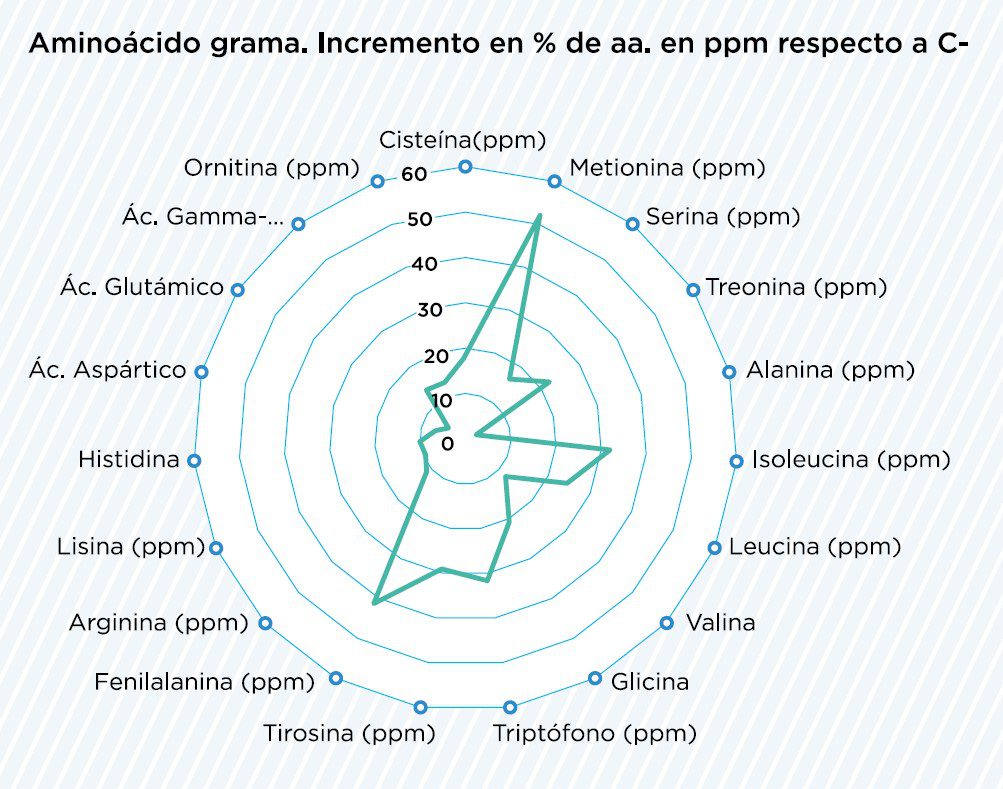
LEV2050 has successfully developed VITIS N Plus, a yeast-lysate–based fertilizer rich in amino acids (Image 2), cofactors, macronutrients, and micronutrients for foliar application. This organic-based fertilizer can improve ripening indices by advancing phenolic maturity (IPT, anthocyanins, and tannins) and enhancing vine physiological activity under stress conditions.
By Dimitri Nicolaides, Agronomist Engineer, M.Sc. in Oenology.
Sources
Geffroy O., Dufourcq T. (2010). Evaluation de 3 préparations biologiques appliquées par voie foliaire sur vigne pour corriger le statut azoté des moûts. IFV Pôle Sud-Ouest. https://www.vignevin-occitanie.com/wp-content/uploads/2018/10/4-preparation-foliaire-biologique-foliaire.pdf
Institut Rhodanien (2003). Guide de la fertilisation raisonnée : Vignobles de la Vallée du Rhône. https://www.institut-rhodanien.com/vin/fr/document/35
Jackson, R. S. (2008). Wine science: Principles and applications (3rd ed). Elsevier Academic Press.
Reynier, A. (2016). Manuel de viticulture : guide technique du viticulteur. 12TH Edition. Lavoisier, Paris. ISBN : 978-2-7430-2129-0